For professional bread baking, choosing a reliable commercial oven is essential. The right unit can deliver consistent heat, even crust development, and efficient operation in busy kitchens. This article highlights five top-rated commercial ovens suitable for bread production, covering electric and gas models, countertop options, and multi-deck configurations. Each product section explains key features, performance considerations, and how it fits different bakery workflows.
Summary of chosen products
| Product | Brand | Type | Key Benefit |
|---|---|---|---|
| Kratos 29Y-057 | Kratos | Full-size electric convection oven | High efficiency, large single deck, versatile temperature range |
| VEVOR Double Deck Gas Convection Oven | VEVOR | Double-deck gas convection oven | High capacity, two burners, no external ventilation required |
| VEVOR 4-Tier Convection Countertop Oven | VEVOR | Countertop electric convection oven | Compact footprint with multiple racks, fast cycling |
| Avantco CO-14 Countertop Convection Oven | Avantco | Quarter-size countertop convection oven | Versatile for small batches, adjustable temps, compact |
| Kratos 29Y-060 | Kratos | Full-size electric convection oven | Energy efficiency, solid heat distribution, durable build |
Kratos 29Y-057: Full-Size Electric Convection Oven

The Kratos 29Y-057 is a full-size electric convection oven designed for high-volume bakery environments. Its 11 kW heating capacity supports rapid heat-up and even heat distribution, enabling consistent bread bake quality across large batches. A 150–500°F temperature range provides flexibility for crust development, proofing, and finishing stages. The model features a direct, forced hot-air system with double-pane thermal glass to monitor progress while preserving energy efficiency. Easy-to-use controls, a 30-minute timer, interior lighting, and cool-to-the-touch handles contribute to safe, straightforward operation in busy kitchens.
Operational considerations include installation by a qualified professional due to 240V, single-phase requirements. This oven suits mid-to-large commercial bakeries that need dependable, single-deck performance with strong visibility into the baking chamber. For bread programs that require crisp crusts with controlled humidity at the surface, this Kratos unit offers a balanced combination of power, visibility, and safety.
VEVOR Double Deck Gas Convection Oven

This gas-fired, double-deck convection oven from VEVOR is built for batch baking and high throughput. With two 40,000 BTU burners per deck and integrated convection fans, it distributes heat evenly to multiple racks, supporting large bread loaves, baguette batches, or rolls per cycle. The interior volume and eight-to-twenty-two rack configurations across two decks enable flexible workflow management, ideal for bakeries that run multi-shift operations. A notable advantage is the absence of external ventilation needs in certain configurations, simplifying installation in spaces with limited ventilation options.
Consider the practical implications: gas ovens often require robust ventilation compliance, proper gas line sizing, and regular maintenance. The VEVOR unit’s mobility features—casters and a sturdy frame—facilitate repositioning within a growing bakery. For bread teams prioritizing throughput and volumetric capacity, this double-deck design offers a scalable solution with strong, repeatable results across batches.
VEVOR 4-Tier Convection Countertop Oven
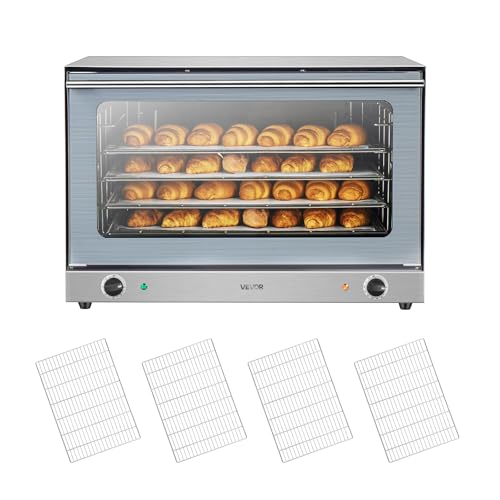
This countertop convection oven from VEVOR provides four racks and a 120L capacity in a compact footprint. With 208–240V operation and 3,800–5,000W of heating power, it circulates hot air via dual convection fans for even browning and uniform crumb structure. The stainless steel body and tempered glass viewing door help with monitoring bake progress while resisting heat and wear in a bustling bakery environment. Its size makes it suitable for production lines that need flexible small-batch baking, proofing, and finishing steps without committing to a full-sized deck oven.
When planning acquisition, consider workflow integration: this unit works well as a supplement to a larger deck oven, handling intermediate product runs or specialty breads. It supports faster turnaround on smaller crates or test batches and can be easily moved to different workstations as demand shifts.
Avantco CO-14 Quarter Size Countertop Convection Oven
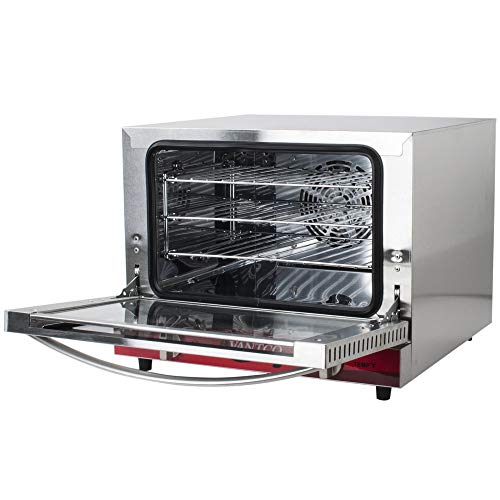
The Avantco CO-14 offers a compact footprint suitable for boutique bakeries, cafes, or test-bake stations within larger facilities. It supports up to three quarter-size sheet pans and features an adjustable temperature range from 150°F to 550°F, enabling tasks from slow proofing to rapid browning. The dual-pane cool-touch glass door enhances safety around hot surfaces in high-traffic kitchen setups. While smaller in capacity, its performance makes it a practical choice for specialty breads, artisan loaves, or demonstrations in retail bakery environments.
Operational notes include suitability for counter height installations and electric power matching 120V, which makes it easy to deploy in spaces with limited electrical capacity. Its quarter-size format is ideal for producing limited runs of crusty loaves, baguettes, or enriched doughs without tying up a larger oven.
Kratos 29Y-060: Full-Size Electric Convection Oven
The Kratos 29Y-060 is a full-size electric convection oven designed for heavy-duty bakery use. Like the 29Y-057, it delivers a robust 11 kW of power with a 150–500°F range, suitable for a wide spectrum of bread applications—ranging from lean dough loaves to enriched crumb structures. Enhanced energy efficiency is supported by double-pane thermal glass, and interior lighting helps staff monitor crust development and bake progression. The unit’s single-deck configuration is ideal for mid-to-large scale bakeries that require dependable performance across multiple shifts.
Key considerations include the requirement for 208V/240V single-phase electrical infrastructure and professional installation. For bakeries expanding throughput, the 29Y-060 provides consistent performance with a straightforward control system and durable construction suitable for long-term operation in busy production lines.
Buying Guide: Key Considerations For Selecting A Bread-Baking Oven
When choosing a commercial oven for bread, consider the following perspectives to balance cost, capacity, and performance:
- Power source and efficiency: Electric ovens deliver precise temperature control and clean operation, while gas ovens often provide high throughput and robust heat. Consider utility availability, space, and ongoing energy costs.
- Deck configuration and capacity: Single-deck ovens are straightforward and easier to install; double-deck or multi-deck ovens dramatically increase batch capacity but may require larger footprints and more complex ventilation planning.
- Size and workflow: Countertop ovens fit small-batch production or pastry-focused lines, while full-size deck ovens suit full bakery production. Map your typical batch sizes, dough hydration, and proofing needs to match equipment capabilities.
- Ventilation requirements: Gas ovens may need external ventilation. Electric ovens often have fewer venting constraints but still require safe electrical installation and compliance with local codes.
- Visibility and safety: Features like interior lighting, double-pane glass, cool-touch handles, and clear door visibility help staff monitor bread without opening doors, preserving oven stability and humidity.
- Durability and serviceability: Stainless steel construction, easy-to-clean interiors, and ready access to replacement parts reduce downtime. Consider brands with readily available service networks.
- Footprint and mobility: Casters and compact models enable flexible kitchen layouts. Plan for workspace clearance and heat management around the unit.
- Cost of ownership: Initial cost, maintenance, energy consumption, and potential downtime should all factor into total cost of ownership over the oven’s lifespan.
For bakeries prioritizing throughput, a doubled-deck or additional deck model can dramatically increase daily bread output. Smaller operations may benefit from a versatile countertop option that scales with demand. Always align oven selection with production goals, available power, and the practical realities of your kitchen layout.