Choosing the best knife for cutting vegetables enhances kitchen efficiency and food preparation precision. This guide presents a curated selection of knives praised for their sharpness, durability, and ergonomic design, helping both home cooks and professionals achieve seamless slicing, dicing, and chopping. Below is a summary table of five notable kitchen knives suited for vegetable cutting.
| Knife | Blade Material | Blade Length | Handle Type |
|---|---|---|---|
| PAUDIN Nakiri Knife | 5Cr15Mov High Carbon Stainless Steel | 7 Inch | Ergonomic Pakkawood |
| HOSHANHO 7 Inch Nakiri Knife | Japanese 10Cr15CoMoV High Carbon Stainless Steel | 7 Inch | Ergonomic Pakkawood |
| imarku Chef Knife – 8 Inch | High-Carbon Stainless Steel (0.6-0.75% carbon) | 8 Inch | Ergonomic Pakka Handle |
| imarku Santoku Knife – 7 Inch | Jananese HC Stainless Steel | 7 Inch | Comfort Grip Handle |
| Zyliss Utility Knife 5.5″ | High Carbon Stainless Steel | 5.5 Inch | Soft-Touch Rubber Ergonomic |
PAUDIN 7 Inch Nakiri Knife for Vegetable Prep

The PAUDIN Nakiri Knife is a versatile 7-inch blade designed for heavy-duty kitchen tasks including slicing, dicing, chopping, and mincing vegetables and meats. Crafted with 5Cr15Mov stainless steel, this knife features a razor-sharp edge at 56+ hardness that ensures effortless food cutting. Its rust-proof and durable blade aligns with renowned cutlery standards. The ergonomic pakkawood handle balances comfort and control for efficient movement during prep. Easily sharpened and maintained, it is an accessible choice for precision and long-lasting performance.
HOSHANHO 7 Inch Nakiri with Japanese High Carbon Steel

The HOSHANHO Nakiri Knife boasts a hand-polished 15-degree ultra-sharp blade made from Japanese 10Cr15CoMoV high carbon stainless steel with a 60HRC hardness rating. This delivers remarkable sharpness and sustained edge retention, ideal for vegetable chopping and fine blade work. The ergonomic pakkawood handle offers a secure, balanced grip reducing fatigue during prolonged kitchen use. Its vacuum heat treatment enhances durability, maintaining a ‘like new’ sharpness with heavy usage. This Nakiri excels at precise, effortless cuts for pro and home chefs alike.
imarku 8 Inch Chef Knife with High-Carbon Stainless Steel
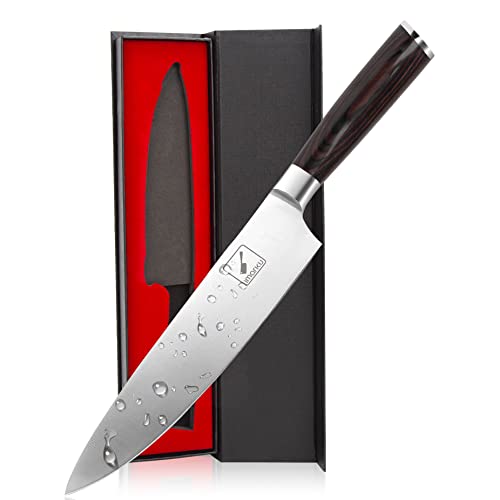
The imarku Chef Knife offers an 8-inch blade constructed from premium high-carbon stainless steel with 0.6-0.75% carbon content, making it more than twice as hard as many comparable knives. Its multifunctional design supports dice, chop, slice, and meat cutting tasks, featuring a Rockwell Hardness Scale between 56-58. The pakka handle is ergonomically crafted from African-origin material known for comfort and durability, reducing hand fatigue during extended use. This high-strength blade suits diverse kitchen cutting requirements efficiently.
imarku 7 Inch Ultra-Sharp Santoku Knife

This imarku Santoku Knife specializes in chopping, slicing, and mincing with a 7-inch blade of Japanese HC stainless steel that resists rust and discoloration. Its hand-polished edge is sharpened at 15-18 degrees per side, ensuring razor-sharp precision and durability for tough kitchen demands. The scalloped hollow edge reduces food sticking, making it easier to produce clean slices. Designed for both professional and home use, the Santoku combines sharpness with ergonomic usability.
Zyliss 5.5 Inch Utility Knife with Rubber Grip

The Zyliss Utility Knife combines versatility with precision in a 5.5-inch blade crafted from high-carbon stainless steel that retains sharpness over time and is easily sharpened. Its ergonomic handle, featuring a soft-touch rubber grip, minimizes hand fatigue and enhances control for detailed tasks such as peeling, slicing, and cutting vegetables and fruits. Suitable for home cooks and pros alike, this knife provides comfortable, multifunctional performance.
Buying Guide: Choosing the Ideal Knife for Cutting Vegetables
Picking the right knife for vegetable prep depends on several important factors:
- Blade Material: High-carbon stainless steel is preferred for durability, rust resistance, and edge retention. Japanese steels often offer superior sharpness and hardness.
- Blade Length and Shape: Nakiri and Santoku knives, typically 7 to 8 inches, are designed for efficient chopping and slicing. Nakiri blades have straight edges for clean vegetable cuts, while Santoku blades feature slight curves for slicing and dicing versatility.
- Sharpness and Edge Angle: A sharper edge with a smaller angle (around 15 degrees per side) allows for precision cutting; however, slightly thicker blades may be more durable for tougher vegetables.
- Handle Ergonomics: Comfortable, balanced handles reduce hand strain. Materials like pakkawood and rubber offer grip stability and fatigue minimization during repeated use.
- Maintenance: Consider ease of sharpening and rust resistance to maintain blade performance over time.
- Weight and Balance: A well-balanced knife distributes weight evenly between blade and handle for better control and safer cutting.
Evaluating these aspects in tandem with intended kitchen tasks ensures selection of a knife that streamlines vegetable preparation while enhancing cutting safety and performance.